

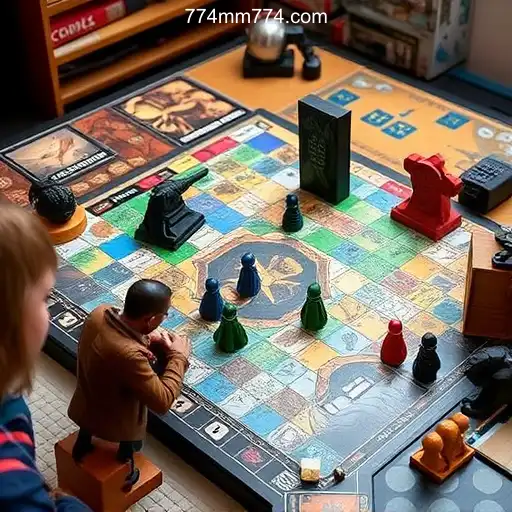
Exploring the World of Tabletop Games: An Adventure into Strategy, Creativity, and Fun
Tabletop games have long been a source of entertainment, bringing together players of all ages for strategy, camaraderie, and exploration. Unlike video games that require screens and multiple electronic components, tabletop games offer a tactile and often more interpersonal experience. The resurgence of interest in tabletop gaming is nothing short of remarkable, fueled by nostalgia, innovation, and a renewed appreciation for unplugged entertainment.
The History of Tabletop Games
The origins of tabletop games can be traced back centuries, with some of the earliest known examples dating back to ancient civilizations. Games like Senet, a game played in ancient Egypt, and Go, originating from China, are among the earliest known tabletop games. These early games were not just forms of entertainment but often carried significant cultural and spiritual importance.
Fast forward to the 20th century, and we see the advent of now iconic board games like Monopoly and Scrabble. These games became household staples, fostering family gatherings and competitive strategizing within domestic settings. The late 20th century marked the entrance of new genres in the tabletop sphere, most notably the introduction of role-playing games (RPGs) like Dungeons & Dragons. These games allowed players to immerse themselves in fictional worlds, crafting their own narratives along the way.
774MM Oficial 💯️ - O melhor cassino online do Brasil and Modern Tabletop Gaming
The rise of the internet and online gaming platforms like 774MM Oficial 💯️ - O melhor cassino online do Brasil introduced a new dimension to gaming culture. While online platforms primarily focus on digital experiences, the resurgence in tabletop gaming represents a shift towards physical interaction and face-to-face socialization, skills that can sometimes be neglected in the digital age.
Modern tabletop games have evolved significantly, encompassing a broad range of themes and mechanics. Popular game categories include strategy games, cooperative games, and party games, each offering unique experiences. Games like Settlers of Catan or Ticket to Ride are considered modern classics, loved for their intricate strategies and engaging gameplay.
The Community and Social Aspect
The community formed around tabletop games is one of its strongest assets. Local game stores and clubs provide spaces where enthusiasts can meet, play, and share their passion for games. Events like game conventions, such as Gen Con and Essen Spiel, draw thousands of participants annually, highlighting the global appeal of tabletop gaming.
Within these communities, players not only compete but also collaborate, exploring new strategies and often inventing new games. The community fosters innovation, creativity, and above all, a shared love for engaging and entertaining experiences.
The Educational Benefits of Tabletop Games
Studies have shown that tabletop games can have significant educational benefits. Strategy games in particular enhance critical thinking and problem-solving skills. Through role-playing games, players develop storytelling abilities and empathy by stepping into characters' shoes and exploring various scenarios.
Moreover, math skills can be honed through games involving resource management and mathematical calculations, while language skills are often improved through storytelling and communication during gameplay. Thus, tabletop games are increasingly being incorporated into educational environments.
The Future of Tabletop Gaming
The future of tabletop gaming looks promising, with continued developments in game design and player engagement. Hybrid games that incorporate both physical and digital elements are expected to become more prevalent, creating an entirely new genre that combines the social aspects of tabletop gaming with the dynamic features of digital gaming.
As the industry grows, we'll likely see even more collaboration between traditional game designers and digital innovators. This fusion could lead to experiences that blend the best of both worlds, offering players immersive adventures like never before.
In conclusion, tabletop games have stood the test of time, continually evolving to accommodate new interests and technologies. They remain a vital part of social culture and community activity, celebrated for their ability to bring people together in shared exploration and enjoyment. Whether played for recreation, competition, or education, tabletop games are a testament to the enduring appeal of interactive play.